Will the West Side Ever Cash in on the Casino?

There is no doubt that the Hollywood Casino has been an improvement to the Westside-Hilltop community. The Casino has many times given money to community causes. Of course the amount is impacted by how much business the casino itself brings in. I have seen many improvements on W. Broad St – of course west of Wilson Rd but nonetheless, improvements. Our problem is (On the Hilltop) and will continue to be a problem because of housing overstock, housing decay, slumlord investors praying and renting to less fortunate populations. This will continue to be unless communities/associations/leaders start working together to force the city to put tough ordinances in place to require that properties be maintained to a standard (and enforced) and to strongly regulate investors renting properties. There needs to be high standard requirements when an investor, especially absentee comes in and starts renting properties that wouldn’t be fit to live in for most of us, but rather geared to a desperate population willing to pay for inefficient housing because they may not qualify elsewhere. We as community citizens need to stop being complacent and stop allowing the trash dumping, drug houses, prostitution, and especially crime to person and property to move in to our streets and communities. We need to start working together with one voice in bringing suggestions, solutions to the city for implementation. If current commissions or associations are not stepping up to this task then we need to have them disbanded and form new ones. In short we can’t be blaming the Hollywood Casino because first they are not in our community they are in Franklin Township who benefits from a percentage of their income taxes. The Casino generously donates money to community causes for the Hilltop, however they are not responsible for the issues facing us. We are. Get out and contribute. Amazingly enough, it starts by just taking care of your own property, picking up the trash on your own street, observing what goes on around you and document it, report it and to FOLLOW-UP. In today’s world nothing is ever resolved by addressing it one time, it is a continual process. It is demanding, draining, and can be time-consuming but if you want a better community you have no choice but to contribute and not be complacent to what is going on around you. Let’s all start today by going out and daily picking up the trash in front of your house, yard and back ways. You will be amazed what you will see in one month of doing this.

What does ISIS really want?

All countries, religions, groups, throughout history have conquered others to instill it’s values, beliefs, and culture. Most always to further these, but rarely if at for the proclaimed ultimate victory of good over evil and the end of the present age, or to the end of the world in general.

A paradise or a Borg collective? – Who’s sole purpose is to serve its God with no regard to one’s personal happiness, expression, desires, wants, ability to grow, or to procreate like any creature on this Earth.

“ISIS makes no secret of its ultimate ambition: A global caliphate secured through a global war. To that end it speaks of “remaining and expanding” its existing hold over much of Iraq and Syria. It aims to replace existing, man-made borders, to overcome what it sees as the Shiite “crescent” that has emerged across the Middle East, TO TAKE IT’S WAR — ISLAM’S WAR — TO EUROPE AND AMERICA, AND ULTIMATELY TO LEAD MUSLIMS TOWARD AN APOCALYPTIC BATTLE AGAINST THE “DISBELIEVERS.”

Its propaganda relies on a very distinct interpretation of the Quran and other religious texts to promote these goals — and most importantly to show its supporters that they are achievable.”

What does ISIS really want?
Tim Lister, CNN
Updated 10:49 AM ET, Fri December 11, 2015

http://www.cnn.com/2015/12/11/middleeast/isis-syria-iraq-caliphate/

Color Me Calm

March is Color Therapy Month

Color Me Calm
Grownups De-Stress with Adult Coloring Books

AVERY MACK

http://www.naturalawakeningsmag.com/Inspiration-Archive/Color-Me-Calm/

Coloring books are no longer solely the domain of children. Immersion in this fun, creative pastime by adults even for just 30 minutes can constitute a focused meditation that relieves stress. Doctor of Psychology Nikki Martinez, in Chicago, says that famed psychotherapist Carl Jung believed coloring helps patients release anxiety.
“It uses both sides of the brain and improves organizational and fine motor skills,” says Martinez. “After I underwent a major surgery, I was on bed rest for eight weeks, and adult coloring books were a lifesaver. They passed the time, were pretty and kept me in a constant state of calm. I devoured them.”
Publishers Weekly reported combined 2015 sales of 1.75 million copies for the 10 bestselling adult coloring books through November. This trend was years in the making, originating when parents colored with their kids and sometimes on their own. Adults around the world now join coloring book clubs, hold related parties and take coloring breaks at work. Last fall, Barnes & Noble hosted the one-day All-American Art Unwind, where customers colored and uploaded their results to Instagram and Twitter. Hallmark sent a crew of artists and calligraphers to select locations to help customers color their greeting cards.
“We scheduled a coloring session for a 55-plus community workshop,” relates Ninah Kessler, a licensed clinical social worker with the Sparks of Genius Brain Optimization Center, in Boca Raton, Florida. “People had so much fun they wouldn’t leave. It’s creative, portable and inexpensive. You never face blank paper because the lines are there; you just pick the colors. There’s no stress about possibly making mistakes.”

March is Color Therapy Month

“Animals, jungle or floral themes, and Zen-inspired mandalas are popular. Customers like realistic, intricate drawings,” explains Idalia Farrajota, a Dallas executive with Michaels craft stores, which offers free, in-store coloring sessions and provides supplies. (Download a free sample book atTinyurl.com/BotanicalColoringPages.) Johanna Basford, a renowned illustrator from Aberdeenshire, Scotland, is a hit with colorists, catering to their penchant for nature with Secret Garden, Enchanted Forest and her latest, Lost Ocean.
“My daughter wanted to color her life, not do generic drawings,” says Dieter Marlovics, prompting him to establish ReallyColor.com, in Chicago. “Really-Color converts photos into coloring book pages to make individually tailored pages.”
Try these eco-tips: Sprout pencils, made with sustainable wood and fruit- and-vegetable-based dyed clay instead of lead, are topped by non-GMO seeds that can be planted when the pencil becomes short. Inktense’s water-soluble brightly colored pencils mimic pen and ink; add water for translucency. Select recycled paper books, soy crayons, watercolor paints and non-toxic markers.

Trump Puppymonkeybaby

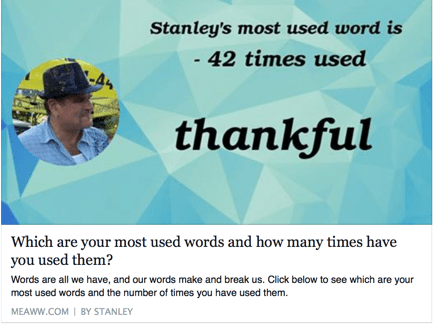
I’d like to see an analysis program ran on all of Trump’s speeches, statements, etc. to extract his three most frequently used words and create a video. I’m sure it will be something as stupid as the Puppymonkeybaby commercial. I still shiver when I see this stupid of stupid commercials but can’t help reciting puppymonkeybaby, puppymonkeybaby, puppymonkeybaby….

NY bill would block use of food stamps for steak, lobster other ‘luxury’ items

Definitely an interesting dilemma. Who’s to say a steak is a luxury item or not. My pet peeve, and again, who am I to say, is seeing food assistance card being used for pop, snacks, candies, candy bars and such and then whip out a bill to buy the cigarettes and beer.

Perhaps a better bill would be to require people on food assistance to take classes on food management and healthy preparation of “raw” foods. “Cooking” as we know it today seems to be merely popping a frozen meal in the microwave.

Well as a recipient of food assistance at one time myself, but also of a generation of knowing how to purchase food, knowing that fresh is better, and was taught how to prepare food, my definition of what is considered acceptable is way different than what is acceptable today. We are an on-the-go society so that usage of the card to purchase a more expensive prepared sandwich or processed meal or making from scratch has a totally different meaning today. At the end, it’s really about managing what resources we have whether earned or given. That is a skill not necessarily known whether you are on food assistance or not. When you provide monetary assistance it is merely that with no expectation otherwise.
——————————————————————————————————————————
By NBC4 Staff
Published: February 19, 2016, 1:32 pm Updated: February 19, 2016, 1:34 pm

http://nbc4i.com/2016/02/19/ny-bill-would-block-use-of-food-stamps-for-steak-lobster-other-luxury-items/

ALBANY, NY (WCMH)– A bill being introduced in New York would keep food stamp recipients from buying “luxury” items with the state’s assistance.
According to the
Journal News, Sen. Patty Ritchie, R-Oswegatchie, St. Lawrence County, introduced the bill that targets non-nutritious or high-end “luxury food items” .
Some of the examples in the bill are lobster, certain steaks, and energy drinks.
“At a time when our state and nation are struggling with an obesity epidemic, it is critically important that taxpayer-funded programs help low-income consumers make wise and healthy food choices,” according to the bill memo.
Jeremy Saunders, co-executive director of Vocal New York, a group that advocates for low-income New Yorkers, told the
Journal News that the bill is “ridiculous.”
“Our food-stamp system is set up for people that do not have enough access to food to be able to get food,” Saunders said. “This is a Republican attempt to make it appear that poor people use tax dollars to buy steak and lobster.”

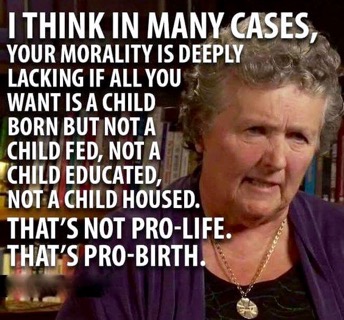
Child born, but not a child fed

I think that the statement is true. If we are going to be about that abortion is wrong and that all children should be born, then let’s step forward and see how those children are going to be cared for. We have many unwanted births in the world with many tools to prevent conception in the first place and even tools to terminate the pregnancy with in a reasonable time. Our culture and spiritual beliefs are dated at best and need to be explored as we continue to populate our world. Especially when we are basically at the verge of our food capacity as we speak. I for one thinking globally, will not sacrifice the quality of my life going forward to be sure that we conceive and populate at every possible moment. We have tools and resources and they need to be used as well as identifying how we as a species are going to continue to live on the small planet that we are on within the current resources we have to sustain ourselves.

Regarding food production: There is waste in all food production from home cooking up the chain but let’s really explore why we are having bacteria and such in our food production and the fact that we are living more and more on genetically altered foods in order to increase food production. We already live in a world where the more privileged can populate with comfort while millions in the world populate without. Discussion can go on but I like the statement that we have many choices in bringing a child into the world and those choices should include the thought of how that child is going to be raised. At the end, one shouldn’t be having children because they biologically can, but rather they should have children because they are prepared to do so.

wantchildbornbutnotfed-2016-02-13-15-331.jpg

Child Protective Services

Well written prospective from the life of a child social worker. Makes one wonder in this prospective if this isn’t the start of the durg use, unsafe lifestyle, and ultimate heroion stories when we read about that epidemic. Perhaps a correlation?

http://www.xojane.com/it-happened-to-me/it-happened-to-me-i-worked-in-child-protective-services

IT HAPPENED TO ME: I Worked In Child Protective Services
You feel responsible for the kid you see in front of you, the kid clearly suffering from a lifetime of abuse and neglect, this kid whose life might have maybe been different, if only. You play “if only” a lot.
ANONYMOUS

I recently took a kid to this hole in the wall pizza joint where I used to take dates to impress them with my vast knowledge of the city’s underrated food. It blew his mind. He was so impressed that he took a picture of the menu. Turns out my secret restaurant knowledge works on kids, too.

After we had pizza, I did not take him home. Instead we got in the car and I took him to one of our city’s youth shelters. He was in the custody of the state and we could not find a foster home. In the two weeks that I had him in custody, he was in five different homes that I can remember (including two shelters), none for more than a couple of nights and some more than once.

As the social worker who had taken him into state custody, I was responsible for him when we couldn’t find a foster home (“placement”) for that night. My job was to pick him up in the morning and to take him to school. On one occasion shelter staff asked me to take him during the day on a weekend. So I took him to eat wings and watch baseball.

I am a social worker and I was in child protective services. It is not like what you see on “Law and Order.” We do not cackle while we grab wailing kids from the arms of screaming parents. We do not ineptly disappear for months on end while our kids rot in some faraway foster home that nobody seems to be able to locate. We do not get rich “snatching babies” and we do not get commission for each kid we take. What we do is navigate an understaffed, underfunded, and completely misunderstood system in order to do the best we can by the most vulnerable kids (and parents) that we have.

Ever since I was a little kid (a little kid who watched a lot of “Judging Amy”), I wanted to work in CPS. I thought Amy’s mom was the baddest bitch on the planet the way she went to bat for her families. I wanted to be her when I grew up. (My mother wanted me to go to law school and be Amy.)

When I was in grad school, I immediately began interning at CPS. During my interview for the internship, the social worker who would become my supervisor asked me if I was aware there would be child abuse involved. I stared blankly at him and told him I understood.

And boy, is there child abuse. There are babies with skull fractures. There are toddlers with tiny little lifetimes of healed fractures. There are newborns abandoned at the hospital. There is the ever-present hat trick of substance abuse, domestic violence, and mental health, and the families who just really, really need help. There are teenagers raped by mom’s boyfriends and thrown out of the house for “stealing” the boyfriends. There are parents with intellectual disabilities who, no matter how hard they try, cannot do it alone. There is the sinking realization that if you scratch the surface of a “dirty house” neglect case, there is something much more serious underneath. There is the multigenerational abuse, the abuse so entrenched in families that we cannot have the grandparents care for the children while the parents are in treatment because the grandparents have child abuse charges from when the parents were little. There are grandparents telling parents they need to just get over being molested because it happened to them too and they turned out just fine.

And, hopefully not too often, there are the fatalities. The ones where you shut your office door and you cry, because you do not know what else to do because a kid died and kids aren’t supposed to die. The ones where maybe the family did have a history with CPS, but there was nothing tangible enough for you to base a legal case on but you knew there was something and you wanted to scream but I know this is something, I just know it, but I can’t prove it, but since you couldn’t prove it you couldn’t do anything and now a kid is dead.

The ones where the family doesn’t have a history because they stayed under the radar and never sent their kids to school and never took their kids to the doctor and never had early intervention and there was never one single eye on those kids outside the family and so no one ever knew and now a kid is dead. The ones where the family had some sort of horrible freak accident like rolling over onto the baby while sleeping or just that one time not securing medication that the baby picked up off the floor and ate or leaving the baby in the hot car and now a kid is dead. I don’t know how to make sense of those. I don’t think any of us do, not even the lifers, the supervisors, the management. But you can feel it in the office hallway. And it feels like shit.

Sometimes we have to take the kids. Usually we don’t –- only about half of all reports are investigated, about a fifth of those investigations result in a substantiated allegation, and a tiny number of those substantiations result in a kid being removed from their home. And it’s hard to take a kid. It’s really damn hard to take a kid and it should be hard to take a kid because it’s serious and we shouldn’t be doing it all willy nilly. Foster care is serious. Treatment plans are serious. Court hearings are serious. Submitting an affidavit swearing that a child cannot be kept safe in the care of their parents is serious. Going up to the witness stand and testifying that someone abused and/or neglected their child while they and their attorney are staring at you is serious.

I’m glad we can’t just do what they show on TV, which is take a kid the second the report alleging abuse or neglect comes in and terminate the parents’ rights three days later. (I wish TV would stop portraying it like this, by the way. It keeps people from calling because they think calling is somehow automatically going to result in the kid being removed and immediately adopted.)

But sometimes it’s hard to take a kid and then when you finally have something you can take to court on this kid who is now a teenager, it all unfolds and you realize you are 15 years too late. You read and re-read through 15 years of case narratives and investigation studies and one or two 48-hour holds that ended in custody being released back to the parents and you think to yourself, We did this. We all, over the last 15 years, did this. We couldn’t help this kid and how many extra beatings, how many extra rapes did this kid endure since we’ve known about this family? You drive yourself crazy going over every interaction you ever had with the family, with the schools, with the other providers who worked with the family wondering what you missed. You look through the case narratives and see that the people who taught you how to do your job, the people you regard as your role models have also worked with this family and they couldn’t find anything to take to court either.

It is a horrible, miserable, all-consuming despair. You question yourself, your work with the family, your work with other families, and pretty much everything up to and including your career choice. You feel responsible for the kid you see in front of you, the kid clearly suffering from a lifetime of abuse and neglect, this kid whose life might have maybe been different, if only. You play “if only” a lot.

Today, I was at the post office, and “Don’t Stop Believing” came on the radio. I started to cry and let the guy behind me in line go ahead. My pizza place kid had played it in the car on the way from a different dinner to a different foster home. He sang along and asked me to sing with him. I circled the block of the foster home until the song was over and then I dropped him off. I have no idea where he is today and I have no idea how he is doing. And it kills me.

I left that job soon after working with my pizza place kid, and it had nothing to do with the families or even with the child abuse. It is damn near impossible to navigate the system from the inside (understaffing, underfunding, zero cooperation between agencies who need to be cooperating to serve families, management that ranged from unsupportive to straight up unethical and abusive) and I felt like I could best serve my kids and their parents from another role. It happens a lot.

They tell us to practice self-care. For me, self-care had to mean leaving.

Anonymous is a social worker who would like you to find out more about becoming a foster parent by contacting your local child welfare agency.